Behaviour
Separation anxiety and boarding: what actually helps
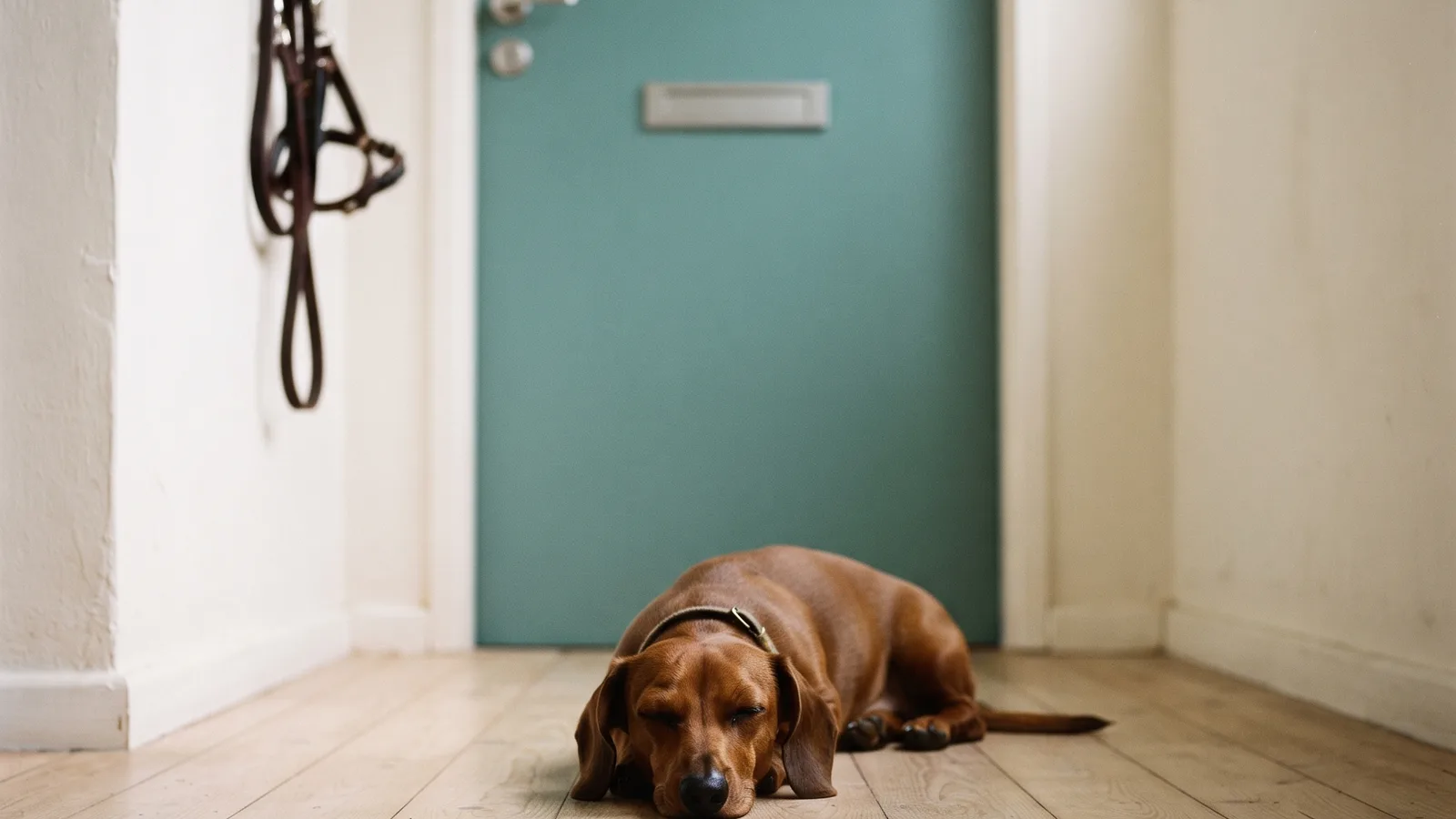
Every owner leaving an anxious dog asks the same question at the door. The useful answer starts weeks earlier, and it starts with working out whether it is really separation anxiety at all.
- Reviewed July 2026
- Sources cited inline
- 12 sections
At a glance
TL;DR. Separation anxiety is panic, not boredom or poor training, and most dogs labelled with it do not have it. Film your dog before you decide. If it is genuine, the work happens in the weeks before a stay: gradual absence training, a crate that means safety, and a trial night. Quiet home-based care usually suits an anxious dog better than a large facility, and the questions worth asking are about supervision, not square footage.
What is separation anxiety in dogs?
Separation anxiety is a distress response triggered by being left alone, or by separation from one particular person. It is a panic state rather than a behaviour problem, which is why it does not respond to the things that fix ordinary misbehaviour. Telling a panicking dog off makes it worse, and a longer walk beforehand tires a bored dog but not an anxious one.
The behaviours are consistent: sustained vocalising, destruction aimed at exits rather than at whatever is nearest, house soiling in a dog that is otherwise reliable, drooling, and repetitive pacing. Escape attempts sometimes cause real injury, and broken nails or a bloodied nose are the sign nobody should ignore.
Section 02
Is it separation anxiety, or just an unsettled dog?
The difference is intensity and duration, and you cannot judge either from the corridor. Buy or borrow a camera and watch the first half hour.
| Signal | Unsettled dog | Separation anxiety |
|---|---|---|
| Onset | A few minutes of protest | Panic within moments of the door closing |
| Duration | Fades, then sleeps | Sustained, sometimes the whole absence |
| Damage | Random: a cushion, a shoe | Focused on doors, windows, the crate door |
| Body | Settles, normal breathing | Drooling, panting, pacing a fixed route |
| Return | Pleased to see you | Frantic, takes a long time to come down |
If the footage shows a dog asleep after four minutes, you have a normal dog and a guilty conscience. That is a good outcome.
03 Rule out the boring explanations first
- Pain. Behaviour change in an adult dog deserves a vet check before a behaviour label.
- Under-exercised young dog. A two-year-old working breed in a flat with one short walk is not anxious, it is under-employed.
- Noise phobia. Thunderstorms and renovation drilling produce identical-looking distress that has nothing to do with you leaving.
- Needing the toilet. Obvious, common, and frequently the whole story with puppies and older dogs.
Why boarding is a specific trigger
Boarding stacks two stressors at once: an unfamiliar place and the absence of the person the dog is attached to. Either alone is manageable for most dogs. Together, on the first night, they produce a lot of noise even from dogs that are entirely stable at home.
Kennel acoustics do not help. Hard surfaces carry sound, one dog starting sets off two more, and an owner listening to a voice note at 11pm hears the worst thirty seconds of an otherwise ordinary evening.
What tips over into genuine distress is when it does not improve. A dog that is quieter on night two and eating by night three has settled. A dog that is escalating has not, and that is the point at which a good boarder calls you rather than waiting.
What to do in the weeks before a stay
Start earlier than feels necessary. Three or four weeks is a workable run-up; three days is not.
- Build absence in small pieces. Leave for two minutes, come back before the dog gets upset, repeat. Extend only when the short version is boring.
- Neutralise the departure cues. Pick up your keys and sit down again. Put your shoes on and make coffee. The cues lose their meaning through repetition.
- Make the crate a good place. Feed meals in it, leave the door open, never use it as a punishment. A crate the dog chooses is a portable safe space; a crate it is shut into for the first time at a boarder is a trap.
- Book a trial day, then a trial night. Two or three weeks before the real stay, at the same boarder.
Our fuller preparation run-up covers the practical packing side alongside this.
Which kind of care suits an anxious dog?
| If your dog... | Then consider |
|---|---|
| Panics when alone but is fine with any human present | A home-based stay with someone in most of the day |
| Is attached to one person specifically | In-home dog sitting in your own flat, where the environment is unchanged |
| Is nervous of other dogs, not of being alone | A one-dog household rather than a group setting |
| Is fine overnight but struggles with the working day | Daytime daycare as a rehearsal before any overnight booking |
| Needs medication on a schedule as well | A facility with staff on site, even if it is busier |
Already know your dates?
Skip the reading. Tell us the dates and what your dog needs, and we shortlist AVS-licensed boarders for you — free, no obligation.
Get matched with a boarderSection 07
What to tell the boarder, honestly
Name the behaviour in plain words. "He can be a bit vocal" gets your dog placed next to the door; "he screams for forty minutes and has scratched through a door frame" gets him placed somewhere that works.
Give them the triggers and the antidotes: what settles him, which word he knows, whether he takes food from strangers, whether a blanket over the crate helps. Cover medication and, crucially, who is allowed to change it.
Then ask the reverse question: what do you do when a dog will not settle? Licensed operators work under the AVS licensing conditions for pet boarding, which set expectations around supervision and welfare, but the conditions do not tell you whether a particular boarder sits on the floor with a frightened dog at midnight. Only the answer does.
08 Questions to ask before you book
- Is anyone physically on site overnight, or is the building locked and checked?
- Where does a distressed dog go? Is there a quieter space away from the group?
- Will you send updates unprompted, including on the bad days?
- What would make you call me rather than wait?
- Have you had a dog like mine before, and what happened?
Anyone we pass an enquiry to appears on the official AVS register of licensed pet boarding facilities. That is the licensing floor, and the questions above are how you find out what sits above it.
Drop-off day: the goodbye
Short and calm. A long emotional farewell tells an already-worried dog that something significant is happening, and a dog reads your posture faster than your words.
Do not sneak out either, which is the overcorrection people make after reading the advice above. A dog that turns around to find you gone learns that you can vanish at any moment, which is the exact belief you are trying to dismantle.
Hand over the bedding unwashed. Your smell is doing useful work.
What normal looks like on the first night
Expect some vocalising, expect a smaller appetite, and expect a dog that looks unimpressed in the photo. Sleeping through by the second or third night is the ordinary trajectory.
Be concerned about a dog still refusing food on day three, obvious weight loss over a longer stay, injury from escape attempts, or a boarder who only ever sends good news. The last one is a boarder problem, not a dog problem.
Coming home: clingy, flat, or fine
Most dogs sleep for a day. Boarding is socially and mentally busy in a way home is not, and tiredness is not trauma.
Short-term shadowing is common and fades. Do not punish a toilet accident in the first day or two; it is stress, not defiance.
If a genuine change persists for more than a week, that is a vet conversation. It may have nothing to do with the stay at all.
Section 12
When boarding is the wrong answer
Sometimes it is, and we would rather say so than take the enquiry. A dog with severe, diagnosed separation anxiety that injures itself when confined needs a plan built with a vet or a behaviourist, not a kennel booking. Neighbour complaints under HDB's expectations around keeping pets and neighbourliness are a signal that the problem is bigger than one trip.
In those cases the realistic options are a sitter in your own home, a person the dog already knows and trusts, or a shorter trip. Tell us the situation when you enquire and we will say honestly if we think boarding is the wrong shape for your dog.
Keep reading
More straight answers on boarding, licensing and looking after a dog in Singapore. If you are ready to book, start from our main guide to dog boarding in Singapore or compare boarding prices.
 Health
 Kennel cough in Singapore: what boarders require
Symptoms, the bordetella shot, and why boarders ask for it two weeks ahead.
Read the guide Logistics
 Pet taxi Singapore: costs and how to get your dog to boarding
Published fares, what a pet taxi includes, and when Grab or a private-hire ride is allowed.
Read the guide Travel
 Pet relocation from Singapore: AVS rules and boarding around a move
Export licences, health certificates, crate rules — and where your dog stays in between.
Read the guideCommon questions
How do I know if my dog has separation anxiety?
Will boarding make my dog’s separation anxiety worse?
Is home boarding better than a facility for an anxious dog?
Should I do a trial night before a long stay?
How long does it take a dog to settle at a boarder?
My dog barks all night and my neighbours complain. What now?
Is my dog clingy after boarding because it was traumatised?
Ready to find your dog a safe stay?
Tell us the dates and what your dog needs. We match you with a vetted, licensed boarder — free.
Still deciding?
See how we check every boarder against the official AVS licensed register before we match you.
How we vet boarders Browse all boarding guides