Logistics
Pet taxi Singapore: how to get your dog to boarding without a car
Dogs are not allowed on the MRT or public buses here, which quietly decides how most Singapore owners get to a boarder. A pet taxi is usually the answer, and it is worth understanding before drop-off morning.
- Reviewed July 2026
- Sources cited inline
- 12 sections
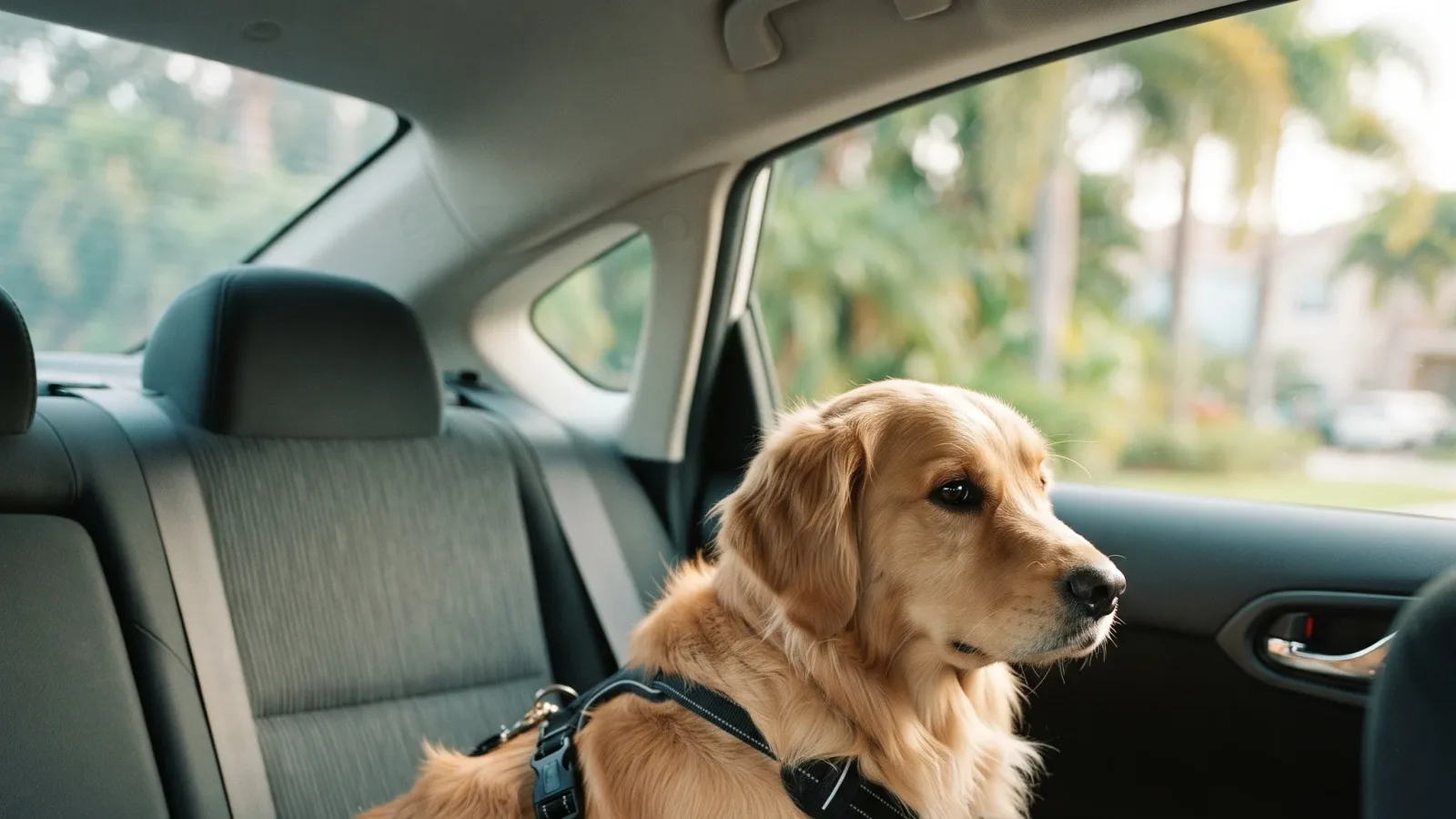
At a glance
TL;DR. Pet dogs cannot travel on Singapore's MRT trains or public buses, so a car-free owner has three realistic ways to get a dog to a boarder: a pet taxi, a private-hire car that accepts pets, or a boarder that collects. Pet taxis are booked per trip and priced mainly by distance, which is a strong argument for choosing a boarder in your own region. Sort the transport before you confirm the booking, not after.
What is a pet taxi in Singapore?
A pet taxi is a private hire service that carries animals, run by drivers whose vehicles are set up for the job and booked per trip rather than flagged down. It exists as a distinct category here for one blunt reason: the ordinary options are closed to dogs. Fares are quoted for the journey, and rise with distance, unsociable hours, waiting time and the size or number of animals travelling.
In practice you are hiring a driver who will not flinch at a wet nose on the window, has a boot liner, and knows what to do when a nervous dog plants itself in a doorway.
Section 02
Why can't I just take the MRT or a bus?
Pet dogs are not permitted on MRT trains or public buses in Singapore. Assistance dogs are the recognised exception. There is no weekend concession, no small-dog-in-a-bag loophole to rely on, and no point planning around one.
That rule shapes everything downstream. It is why a boarder forty minutes away is a materially different proposition from one ten minutes away, why pet taxi demand spikes in exactly the weeks kennels fill, and why so many first-time boarders discover a logistics problem the night before they fly.
It also quietly reprices the whole decision. A boarder charging a few dollars less per night, on the other side of the island, can end up costing more once two return trips are added.
03 How much does a pet taxi cost in Singapore?
Pet taxi fares in Singapore are quoted per trip, not metered, and the dominant variable is distance. Beyond that, four things commonly move the number: the hour (very early and very late trips cost more), waiting time if you are not ready, a second animal in the same journey, and any cleaning required afterwards.
We are not going to print a headline figure. Rates move, operators price differently, and a stale number on a page like this is worse than no number, because people budget against it. What we will say is how to get a real one: message two operators with your exact pickup postcode, destination postcode, date, time, dog size and whether you need a return leg. Quotes that vary a lot usually differ in what is included, not in greed.
Pet taxi, drive yourself, or boarder pick-up?
| Option | Best for | Watch out for |
|---|---|---|
| Drive yourself | Owners with a car; nervous or reactive dogs | A loose dog in the footwell; parking at the boarder |
| Pet taxi | Car-free households; early-flight drop-offs | Notice periods at peak; crate requirements; cleaning fees |
| Boarder pick-up | Stays long enough to trigger a free-collection threshold | Radius limits; fixed collection windows that clash with your flight |
Ask about the third option every single time you enquire. It is the one owners forget exists, and it is the one that most often turns out to be free.
How choosing a nearer boarder pays for itself
Every boarding stay is at least two journeys, and often four once you count the empty legs a driver charges for. Distance therefore gets multiplied, not paid once.
Run the arithmetic before you fall in love with a facility. A place across the island at a slightly lower nightly rate can lose that advantage entirely on transport, and it costs you the ability to drop in, visit beforehand, or collect early when a trip gets cut short.
If you have not narrowed the geography yet, our boarding by area across Singapore page lists every town in each region, and what a stay costs sets out the published rate bands so you can compare the whole number rather than one part of it.
What to prepare before the driver arrives
Most failed pickups are equipment problems, not dog problems.
- Crate or harness ready and assembled. Not still boxed, not being fought with in the corridor.
- A towel, plus a spare. One under the dog, one for whatever happens.
- Lead clipped on before the front door opens. Lift doors and car parks are where dogs bolt.
- Food, medication and the vaccination record packed separately so the boarder is not unpacking a suitcase at handover.
- A short toilet break first. Obvious, routinely skipped, and the cause of most cleaning fees.
Our fuller run-through of getting your dog ready for the stay covers the days before, not just the morning of.
Already know your dates?
Skip the reading. Tell us the dates and what your dog needs, and we shortlist AVS-licensed boarders for you — free, no obligation.
Get matched with a boarderSection 07
Dogs that hate cars
Car sickness in dogs is common, and it usually shows before the vomiting: drooling, excessive lip-licking, whining, a dog that flattens itself on the seat. A dog that has only ever been in a car to visit the vet has also learned something specific about cars.
Two or three short practice trips in the fortnight beforehand, ending somewhere good rather than at a clinic, are the cheapest intervention available. Tell the driver in advance so they can drive accordingly and put the dog where it settles best.
Skipping the pre-trip meal is a common tip, and it is one to run past your vet rather than a website, particularly for puppies and for dogs on medication.
08 Booking notice, peak periods and no-shows
The weeks that fill kennels fill vans. September, November and the December to January window into Chinese New Year are the pinch points, and a driver who was available at two days' notice in March may need a week in December.
Book both legs together. Confirm the vehicle, the driver's name and the exact meeting point, because "the lobby" means three different things in a condo with three towers. If your flight moves, message immediately rather than at the new departure time; drivers can usually reshuffle with notice and rarely without it.
Questions to ask a pet taxi before you book
- Is your vehicle set up for a dog my dog's size, and do you supply a crate or do I?
- What is the cleaning or soiling charge, and when does it apply?
- Will you handle the dog at either end, or am I expected to load and unload?
- What is the cancellation policy, and what happens if my flight shifts?
- Do you carry more than one animal per trip?
What a pet taxi is not
A pet taxi is a transport service, and that is the whole of it. It is not a pet ambulance, and a driver is not a substitute for an emergency vet run when a dog is in trouble. It is not a boarding service, and being in a driver's car for an hour is not care.
For our part: we match owners with licensed boarders and we neither run nor resell transport. Nobody pays us to name them here, which is why no operator is named. When you are ready to check the boarder itself, the official AVS register of licensed pet boarding facilities is the list that matters, and the Animal & Veterinary Service pet owner guidance covers the wider obligations that come with owning a dog here.
Getting to boarding, by region
Three journeys come up again and again in Singapore. The east-side pre-flight run to a boarder near Changi, which is short and popular and books out early. The cross-island drop-off, which is the expensive one and the one worth designing out. And the northern route, where owners driving up to Malaysia leave the dog near the Causeway on the way.
Work out which of those you are before you shortlist, then pick the boarder to suit the journey rather than the other way round.
Section 12
Where our figures come from
The search demand behind this guide is live Singapore data from July 2026. Everything else here is either a rule that applies island-wide or a mechanism you can verify with two messages to an operator. Where we could not confirm a number, we left it out rather than rounded it into something that looks authoritative and is not.
Keep reading
More straight answers on boarding, licensing and looking after a dog in Singapore. If you are ready to book, start from our main guide to dog boarding in Singapore or compare boarding prices.
 Health
 Kennel cough in Singapore: what boarders require
Symptoms, the bordetella shot, and why boarders ask for it two weeks ahead.
Read the guide Travel
 Pet relocation from Singapore: AVS rules and boarding around a move
Export licences, health certificates, crate rules — and where your dog stays in between.
Read the guide Money
Money Pet insurance in Singapore: does it cover boarding?
What SG policies actually pay out for during a boarding stay, and the common exclusions.
Read the guideCommon questions
Can I take my dog on the MRT in Singapore?
How much does a pet taxi cost in Singapore?
How far in advance should I book a pet taxi?
Does my dog need a crate in a pet taxi?
Will a normal Grab or taxi take my dog?
Do dog boarders in Singapore offer pick-up?
What happens if my dog is sick in the car?
Ready to find your dog a safe stay?
Tell us the dates and what your dog needs. We match you with a vetted, licensed boarder — free.
Still deciding?
See how we check every boarder against the official AVS licensed register before we match you.
How we vet boarders Browse all boarding guides