Health
Kennel cough, and why your boarder asks about it first
A harsh, honking cough that arrives out of nowhere is the reason most Singapore boarders ask for a Bordetella shot before your dog walks in. Here is what the illness actually is, and what the vaccine can and cannot do.
- Reviewed July 2026
- Sources cited inline
- 12 sections
At a glance
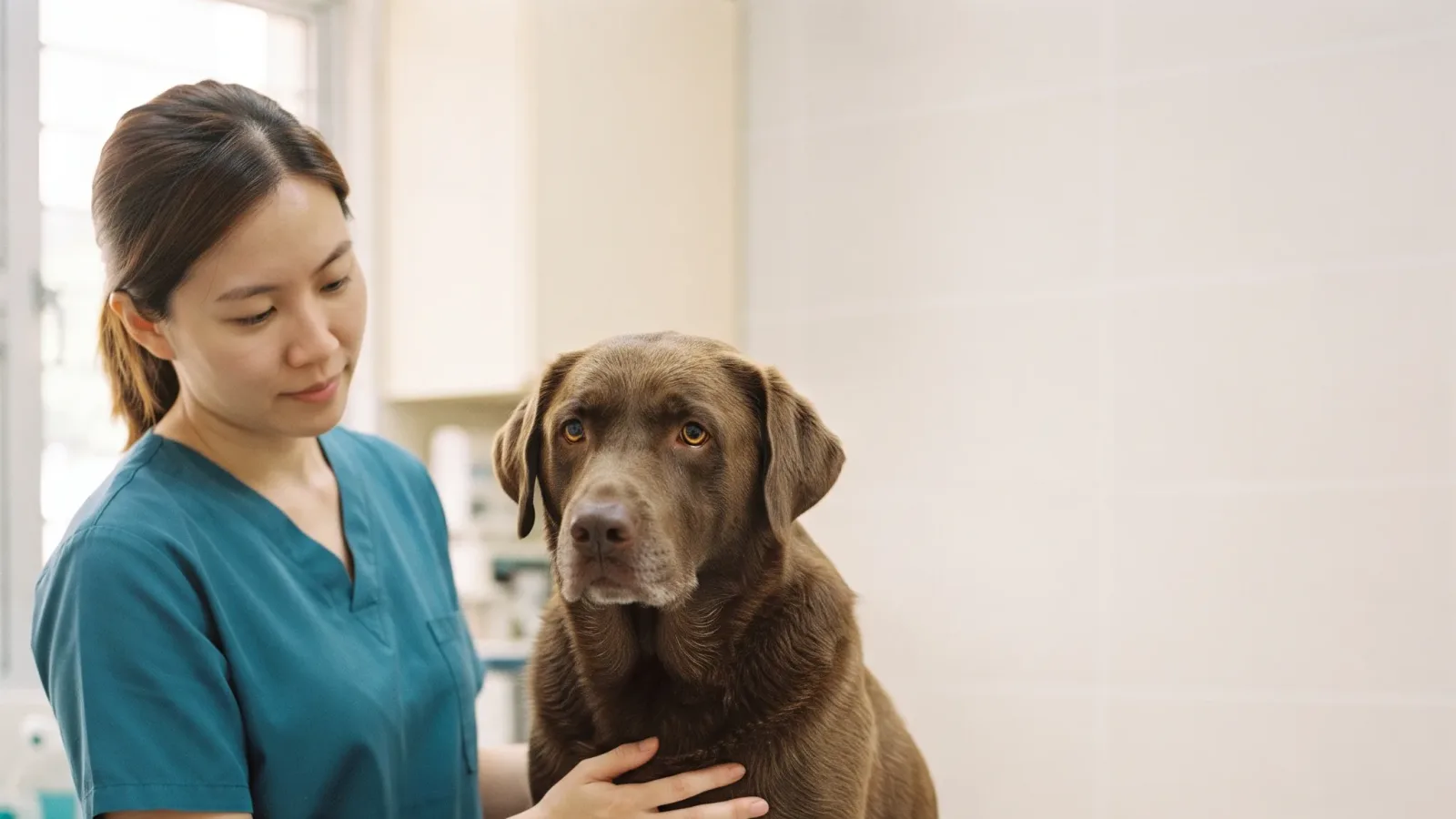
TL;DR. Kennel cough is a contagious respiratory illness of dogs, most often caused by Bordetella bronchiseptica together with canine parainfluenza virus. It spreads through shared air, shared bowls and nose-to-nose contact, so it moves fast anywhere dogs are housed together. The Bordetella vaccine lowers the risk and usually softens the illness, but it does not make a dog immune. Almost every Singapore boarder asks for it, and they want it given well before drop-off, not the night before.
What is kennel cough?
Kennel cough is a contagious respiratory illness of dogs, known clinically as canine infectious tracheobronchitis. It involves the airway rather than the lungs in most cases, which is why an infected dog can sound dreadful and still behave normally. The usual cause is a combination rather than a single germ, most often the bacterium Bordetella bronchiseptica alongside canine parainfluenza virus, which is why vets increasingly describe it as a complex rather than one disease.
It travels through airborne droplets when a dog coughs, through direct nose-to-nose greeting, and through surfaces that several dogs share. A water bowl, a rope toy and a fence line are all realistic routes. The American Kennel Club's veterinary explainer on kennel cough sets out the same picture.
The name is unhelpful, because it makes owners think kennels are uniquely to blame. Any place dogs mix qualifies: daycare, the groomer, a training class, a busy park, or a queue at the vet.
Section 02
How do I know it is kennel cough and not something else?
The classic presentation is a sudden dry cough with a honking quality, often ending in a retch that owners mistake for vomiting. A little white foam sometimes comes up with it. The dog is usually still bright, still greeting you at the door, and still interested in dinner.
That contrast is the useful signal. When the cough arrives with lethargy, a poor appetite, laboured breathing or a fever, you are no longer looking at the textbook mild case, and that dog needs a vet the same day rather than a week of watching.
A cough that sounds awful in a dog that is otherwise itself is the common picture. A cough in a flat, quiet, off-food dog is the one to move quickly on.
Other things cough too. Heart disease, a collapsing trachea in small breeds, something inhaled on a walk, and a plain allergic irritation can all produce a cough. Diagnosis is a clinical job, and nothing on this page replaces it.
03 How does it spread so fast in boarding and daycare?
Shared air is the mechanism. Dogs in a boarding house breathe the same room air for hours at a stretch, and a cough puts droplets into it. Add shared bowls, shared toys and the natural nose-to-nose greeting between dogs, and one incubating arrival can seed a house before anyone knows there is a problem.
Incubation is the part that catches people out. A dog can be carrying and shedding before the first cough, so an owner who checks their dog carefully on drop-off morning can still, in complete good faith, bring it in.
This is also why an outbreak is not automatic proof of a badly run facility. What separates a good operator is not that cases never happen. It is whether they have somewhere to isolate a coughing dog, a vet on call, and the habit of telling owners promptly.
Why does my Singapore boarder ask for the Bordetella vaccine?
Because the alternative is gambling with every other dog in the building, including yours. Boarders set their own entry conditions, and a vaccination requirement is the cheapest, least intrusive control they have.
Licensed operators here are also working inside a formal framework. Commercial pet boarding in Singapore requires a licence from the Animal & Veterinary Service, and the AVS licensing conditions for pet boarding set expectations around premises, animal health management and record-keeping. A boarder asking for vaccination records is behaving like a business that intends to keep its licence.
Ask for the requirement in writing at the enquiry stage. You want the list of vaccines and the interval they expect, not a verbal “yes we need the kennel cough one”. Our guide to the vaccinations boarders ask for covers the wider list.
How far ahead does the kennel cough vaccine need to be given?
Far enough ahead that it has done something. A vaccine given on the way to drop-off has not had time to produce a useful response, and an experienced boarder will know that from the date on the record.
The forms differ. Intranasal and oral versions work on the lining of the airway and generally act faster than the injectable version, which typically needs an initial course of two doses before it is considered complete in a dog that has never had it. Those are veterinary decisions with real variation between products and between dogs, so the specific interval for your dog belongs to your vet.
The practical sequence that avoids disappointment is simple. Get the boarder's written requirement, take it to your vet, book the appointment with weeks of margin rather than days, and keep the record somewhere you can photograph it.
Does the vaccine actually prevent kennel cough?
Not reliably, and any page that tells you otherwise is overselling. The vaccine targets the most common causes, chiefly Bordetella, while the illness can be produced by several other organisms. A vaccinated dog can still cough.
What vaccination generally buys is a lower chance of infection and a milder, shorter illness if it happens. That is worth having, particularly for a dog about to spend a fortnight in shared air.
It also explains why sensible boarders do not treat the vaccine as the whole plan. Ventilation, cleaning between guests, sensible group sizes and a genuine isolation space matter alongside it.
Already know your dates?
Skip the reading. Tell us the dates and what your dog needs, and we shortlist AVS-licensed boarders for you — free, no obligation.
Get matched with a boarderSection 07
Which dogs are most at risk?
Four groups deserve extra caution before a boarding stay:
- Puppies. Immature immune systems and incomplete vaccination courses. See our note on how young is too young for boarding.
- Senior dogs. Less reserve, and often other conditions in the background.
- Flat-faced breeds. Pugs, French bulldogs and similar already work harder to breathe.
- Dogs on immune-suppressing treatment or with existing airway disease.
For these dogs, the density of the setting matters as much as the paperwork. A quiet home with one or two guests is a different exposure profile from a busy facility, which is one reason owners of at-risk dogs often choose in-home sitting instead.
08 My dog started coughing and we board next week
Call the vet first, the boarder second, and do both today rather than on drop-off morning. The vet tells you what you are dealing with. The boarder tells you what their policy allows.
Do not take the dog in and hope. A licensed operator will hear it in the car park, and you will have made the trip for nothing while also exposing a waiting room full of other dogs.
Most boarders would rather move your dates than admit a coughing dog, because an outbreak costs them far more than one changed booking. Ask specifically what happens to the deposit when the reason is illness, and ask for the answer in the same message thread you booked in.
How is kennel cough treated?
Treatment is a veterinary decision, and for many healthy adult dogs it is largely supportive: rest, isolation from other dogs, and time. Antibiotics are not automatic, since a good share of cases are viral in origin, and a vet weighs that case by case.
Harness rather than collar is a small practical change worth making while a dog is coughing, because pressure on the trachea sets off another round.
Escalate without waiting if breathing becomes laboured, if the dog goes off food, if there is a fever, or if a puppy or senior dog is affected. Complications including pneumonia are the reason those groups get treated more cautiously.
How long is my dog contagious?
Longer than owners assume, and not neatly aligned with the cough. Dogs can shed before symptoms appear and can remain a risk after the obvious coughing settles, which is why “he stopped coughing yesterday” is not a clearance certificate.
Facilities usually apply their own rule, commonly a defined symptom-free window before they will take the dog back. Get two answers before you rebook: what your vet says about your dog, and what the boarder requires as a matter of policy.
What lowers the risk without cancelling the trip
Density is the lever you can actually pull. Fewer dogs in the same air means fewer chances for an infected one to be in it.
- Ask how many dogs are housed at once, and whether new arrivals mix immediately with the existing group.
- Ask where a coughing dog goes, physically. A vague answer is an answer.
- Ask whether every guest must show the same vaccination record yours does.
- Consider a home-based stay with one or two guests for an at-risk dog.
Every operator we pass an enquiry to is checked against the official AVS register of licensed pet boarding facilities first. That is the floor, not the ceiling; the questions above are how you find the ones well above it. Our page on a licensed boarder we have checked explains what we look at.
Section 12
Where this advice stops
We are a directory, not a clinic. Everything above is written to help you have a better conversation with your vet and a sharper one with your boarder, not to replace either.
Three things only your vet can decide: whether your dog's cough is kennel cough, which vaccine form suits your dog, and when your dog is safe around others again. Three things only your boarder can tell you: their vaccination requirement, their isolation arrangement, and their policy when a booking is cancelled for illness. Get both sets of answers and the trip stops being a gamble.
Keep reading
More straight answers on boarding, licensing and looking after a dog in Singapore. If you are ready to book, start from our main guide to dog boarding in Singapore or compare boarding prices.
 Logistics
 Pet taxi Singapore: costs and how to get your dog to boarding
Published fares, what a pet taxi includes, and when Grab or a private-hire ride is allowed.
Read the guide Travel
 Pet relocation from Singapore: AVS rules and boarding around a move
Export licences, health certificates, crate rules — and where your dog stays in between.
Read the guide Money
Money Pet insurance in Singapore: does it cover boarding?
What SG policies actually pay out for during a boarding stay, and the common exclusions.
Read the guideCommon questions
What are the first signs of kennel cough?
How long does kennel cough last in a dog?
How far before boarding does my dog need the kennel cough vaccine?
Can a vaccinated dog still catch kennel cough?
My dog is coughing and we board next week. What do I do?
Do all Singapore boarders require the Bordetella vaccine?
When is my dog safe around other dogs again?
Ready to find your dog a safe stay?
Tell us the dates and what your dog needs. We match you with a vetted, licensed boarder — free.
Still deciding?
See how we check every boarder against the official AVS licensed register before we match you.
How we vet boarders Browse all boarding guides